

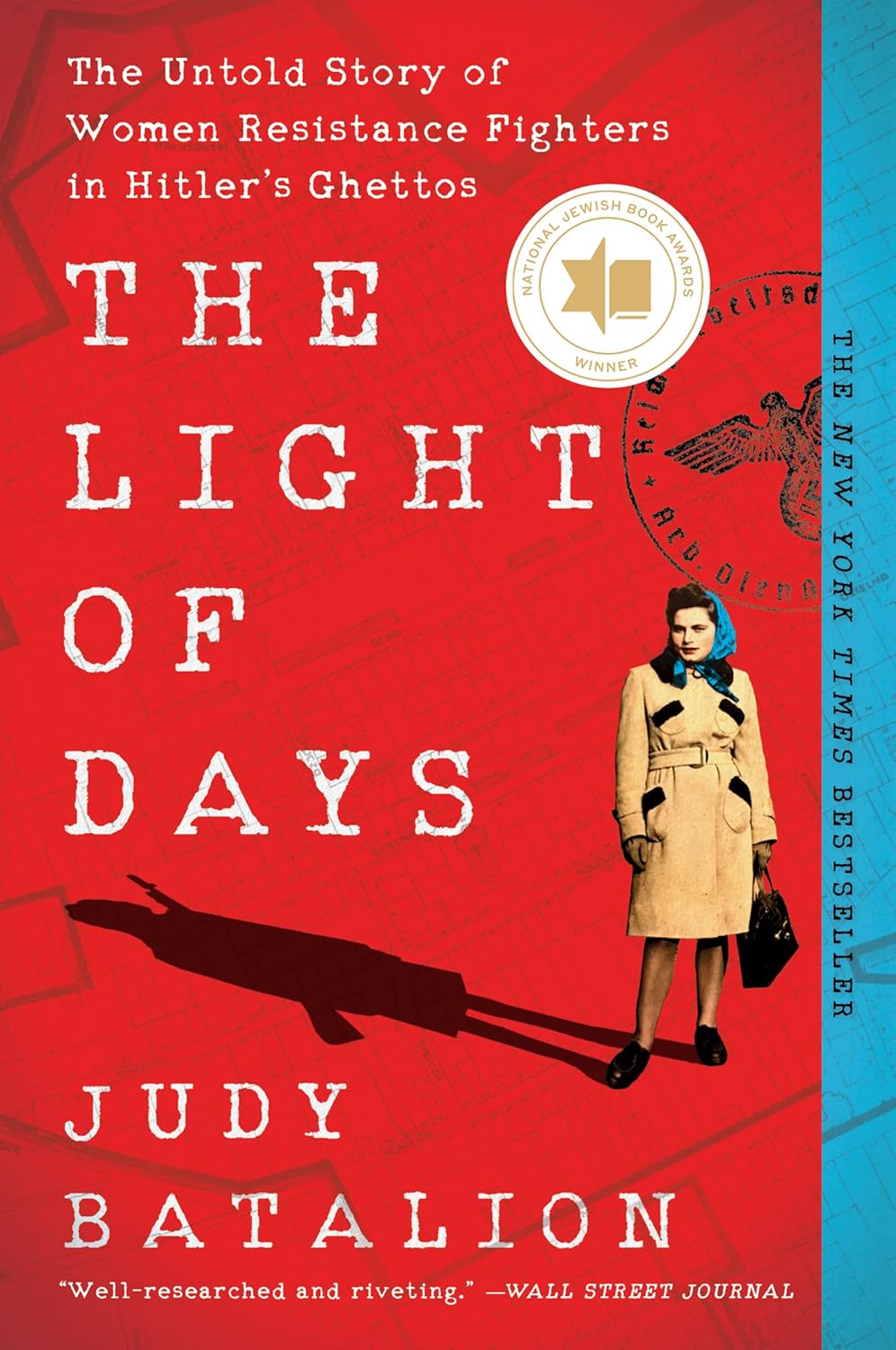
The Light of Days: The Untold Story of Women Resistance Fighters in Hitler’s Ghettos by Judy Batalion
$0.90
Book Title: The Light of Days: The Untold Story of Women Resistance Fighters in Hitler’s Ghettos
Author: Judy Batalion
Publication Year: 2021
Genre: History / Holocaust Studies / Biography / Women’s History
Awards: National Jewish Book Award Winner
Recognition: New York Times Bestseller
Historical Period Covered: World War II (1939–1945)
Primary Focus: Jewish women who served as resistance fighters in Nazi-occupied Europe, particularly within ghettos and underground movements.
A Hidden Chapter of Holocaust Resistance
When the history of World War II and the Holocaust is discussed, the narrative often centers on immense suffering, persecution, and tragedy. While these realities are essential to remember, they sometimes overshadow another powerful aspect of the story: resistance.
The Light of Days by Judy Batalion shines a long-overdue spotlight on a remarkable group of individuals whose courage has largely been overlooked—young Jewish women who fought back against Nazi oppression. Through meticulous research and gripping storytelling, Batalion uncovers the extraordinary contributions of female resistance fighters operating inside and outside the ghettos of Nazi-occupied Poland and Eastern Europe.
These women were not merely survivors. They were couriers, spies, smugglers, saboteurs, and fighters who risked their lives to undermine the Nazi regime. Their stories challenge long-held assumptions about passivity during the Holocaust and reveal a network of bravery that has remained hidden for decades.
The Discovery That Inspired the Book
The origins of The Light of Days began with an unexpected discovery. While researching in London, Judy Batalion came across a rare Yiddish memoir from 1946 titled Freuen in di Ghettos (“Women in the Ghettos”). This nearly forgotten collection of accounts described the actions of Jewish women who had participated in resistance movements during the war.
Batalion was stunned. These stories contradicted many popular narratives about the Holocaust. Instead of helpless victims, these women appeared as determined fighters—individuals who took enormous risks to resist oppression.
This discovery launched a decade-long research journey. Batalion traveled through archives across Europe and North America, studying documents, interviews, memoirs, and testimonies to reconstruct the lives of these extraordinary women.
The result is a vivid historical narrative that blends academic research with compelling storytelling, bringing these forgotten heroines back into the historical record.
Young Women at the Heart of the Resistance
One of the most striking revelations in the book is the central role played by very young women, many of them teenagers or in their early twenties.
These women belonged to Jewish youth movements that existed before the war. These organizations emphasized education, community responsibility, and moral leadership. When Nazi occupation began, many members of these movements transitioned from social organizations into underground resistance networks.
Women quickly became indispensable to these operations. Because they were often underestimated by Nazi authorities, they could move more freely between ghettos and cities. This allowed them to carry out dangerous missions that were vital to the resistance.
Their responsibilities included:
-
Smuggling weapons into ghettos
-
Transporting messages between resistance cells
-
Forging identification papers
-
Escaping ghettos to organize outside support
-
Carrying out acts of sabotage against Nazi infrastructure
These missions required extraordinary bravery. If captured, resistance fighters faced torture, imprisonment, or execution.
Yet many continued their work despite knowing the risks.
Couriers: The Lifeline of the Underground
Among the most important roles played by these women was that of courier, known in Polish as a kashariyot.
Couriers served as the communication network of the Jewish resistance. They traveled between ghettos, partisan groups, and underground organizations, carrying messages, weapons, and supplies.
Because many could pass as non-Jewish by using forged documents or disguises, they were able to cross checkpoints and travel by train across occupied territories.
Their missions were extraordinarily dangerous. A single mistake—a suspicious glance, a mispronounced word, or an unexpected inspection—could mean immediate arrest.
Yet these couriers continued their journeys again and again.
Through their work, isolated resistance groups were able to coordinate actions, share intelligence, and plan uprisings against Nazi forces.
Resistance Inside the Ghettos
The ghettos created by Nazi authorities were designed to isolate Jewish populations and strip them of resources and hope. Life inside them was marked by overcrowding, hunger, disease, and constant fear.
Despite these conditions, resistance movements began to emerge.
Women played crucial roles in organizing these underground networks. They helped distribute illegal newspapers, train fighters, and gather intelligence about German operations.
One of the most famous examples of Jewish resistance occurred during the Warsaw Ghetto Uprising of 1943. Although the uprising ultimately could not defeat the overwhelming Nazi forces, it became one of the most powerful symbols of Jewish resistance during the Holocaust.
Batalion’s book reveals that women were deeply involved in these resistance efforts—not only as supporters but also as active participants in planning and combat.
Acts of Courage and Survival
The stories in The Light of Days are filled with remarkable acts of courage.
Some women carried pistols hidden beneath clothing while traveling through heavily guarded areas. Others smuggled dynamite into ghettos to prepare for armed uprisings. Still others worked with partisan groups in forests, participating in sabotage operations against railways and military targets.
Their bravery was matched by extraordinary resilience. Many endured the loss of family members, constant danger, and the emotional strain of living under false identities.
Yet they continued their work, driven by a sense of responsibility to their communities and a determination to resist injustice.
Through Batalion’s detailed research, these women emerge as complex individuals—brave, resourceful, and deeply human.
Challenging the Narrative of Passivity
For decades, the story of Jewish resistance during the Holocaust was overshadowed by the sheer scale of Nazi brutality. Many people assumed that victims had little opportunity to resist.
The Light of Days challenges this assumption.
Batalion demonstrates that resistance took many forms—not only armed rebellion but also acts of cultural preservation, education, communication, and sabotage.
Women were often at the center of these efforts, even though their contributions were frequently overlooked in postwar histories.
By restoring these stories to public awareness, the book expands our understanding of the Holocaust and the many ways individuals fought to preserve dignity and freedom under impossible circumstances.
The Importance of Memory and Recognition
One of the most powerful messages of The Light of Days is the importance of remembering these women and their contributions.
Many of the resistance fighters documented in the book survived the war but struggled to have their stories recognized. In the decades following World War II, historical attention often focused on military battles or political leaders rather than grassroots resistance movements.
Batalion’s work helps correct this imbalance by bringing these stories into the global historical conversation.
Their courage reminds us that even in the darkest moments of history, individuals can find ways to resist injustice and fight for dignity.
Why This Book Matters Today
The Light of Days is not only a work of historical scholarship but also a deeply moving narrative about human courage.
By highlighting the stories of young women who risked everything to oppose tyranny, the book broadens our understanding of resistance and heroism.
It also underscores the importance of preserving historical memory. As the generation that experienced World War II continues to pass away, books like this ensure that their stories remain alive for future generations.
For readers interested in Holocaust history, women’s history, or stories of extraordinary bravery, Judy Batalion’s work offers a powerful and unforgettable account.
📚 Ultimately, The Light of Days illuminates a hidden chapter of World War II history. Through the stories of courageous young women who refused to surrender to oppression, the book reminds us that resistance can emerge even in the most desperate circumstances—and that the light of courage can shine even in the darkest times.
Reviews
There are no reviews yet.